The most active part of a company is not always where people sit quietly at their desks or gather around a meeting table. Valuable information often moves through moments that were never scheduled: colleagues from different teams running into each other, a conversation continuing after a meeting, or two groups gradually building trust simply because they share the same place.
These informal encounters rarely appear on an organizational chart, yet they shape how quickly information travels, how well teams collaborate and how new ideas emerge. We call the space that supports them the Plaza.
The Plaza Is Like a Router for the Office
A router does not create information. It connects it and keeps it moving. The Plaza plays a similar role.
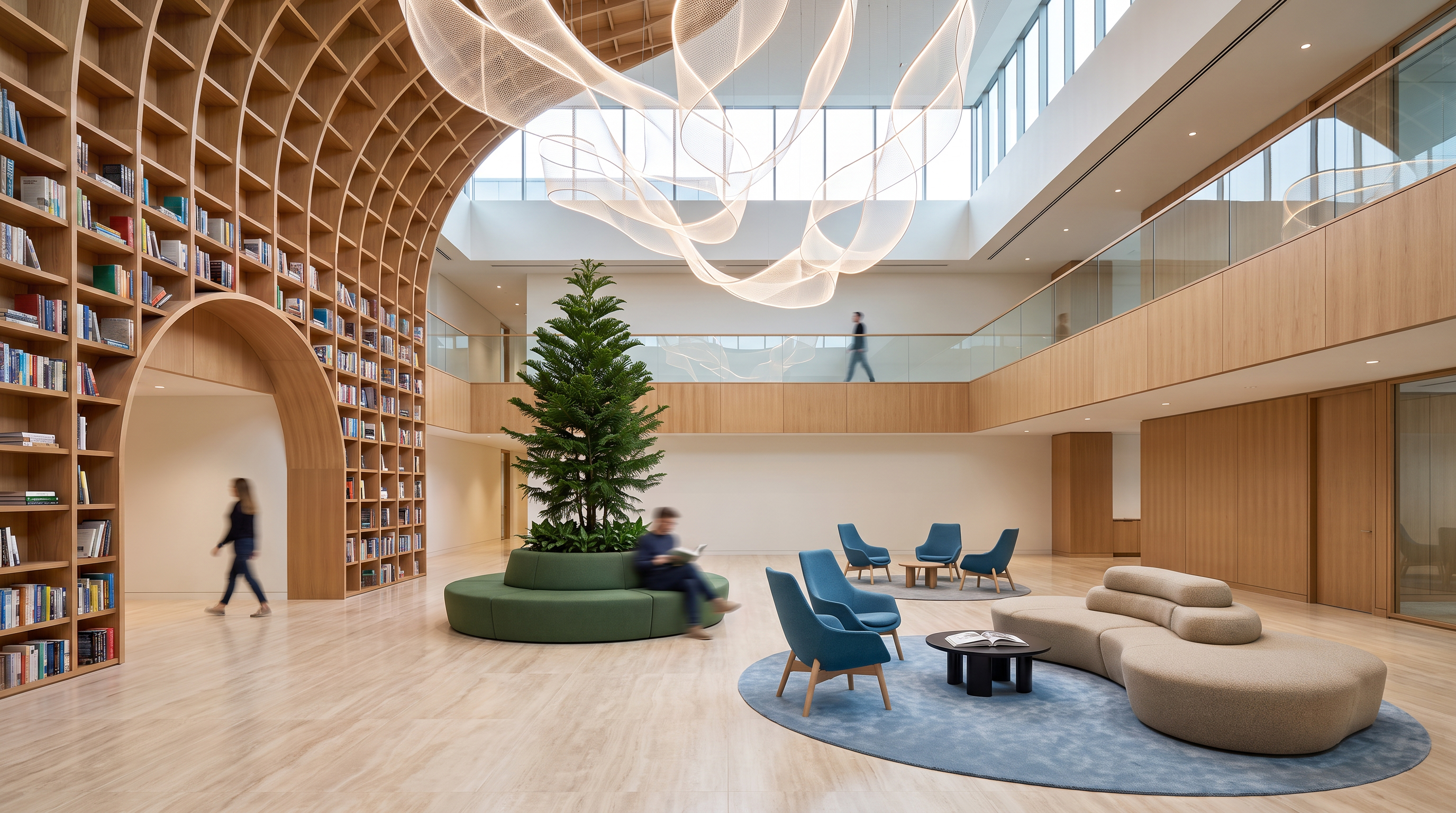
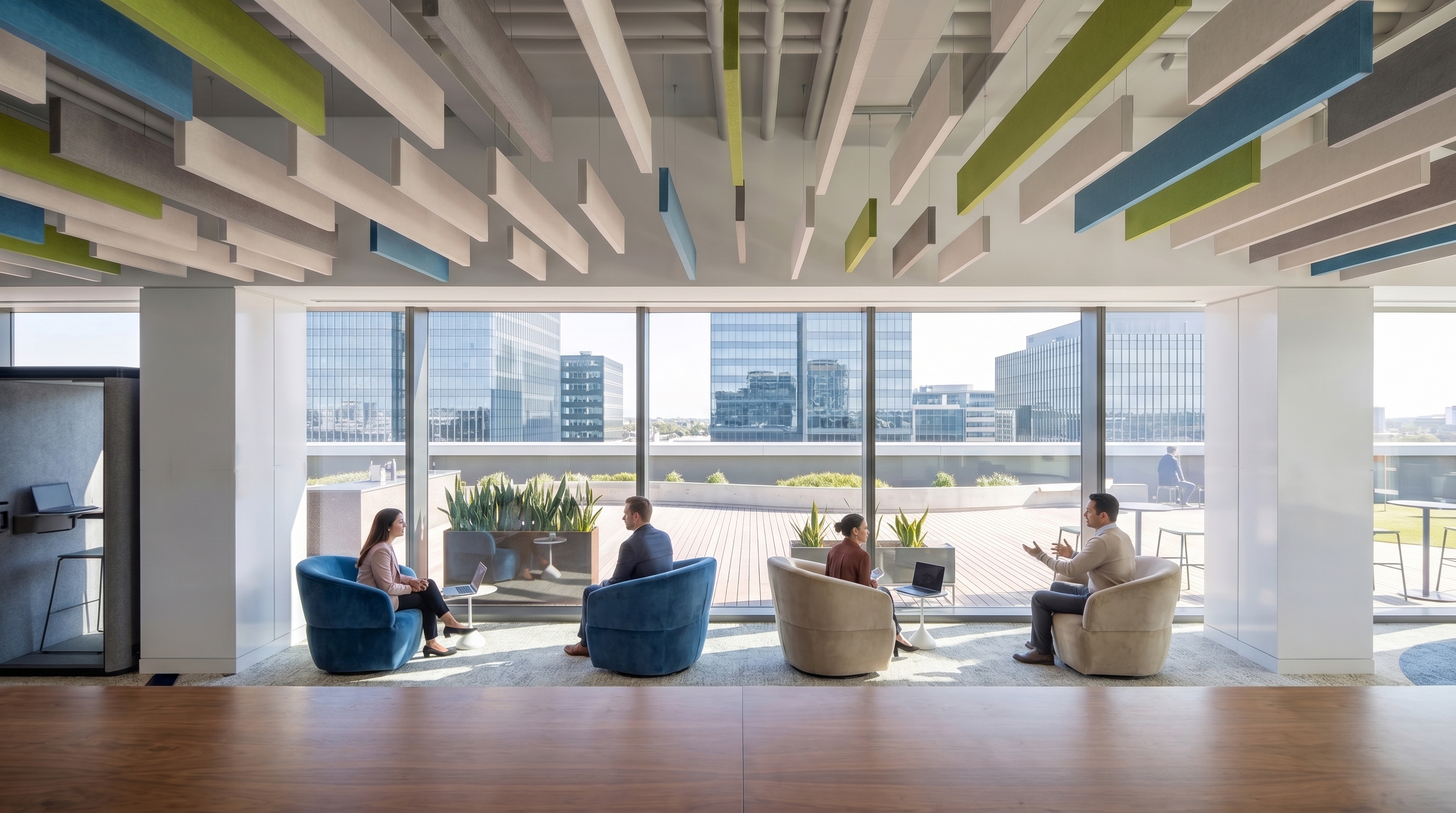
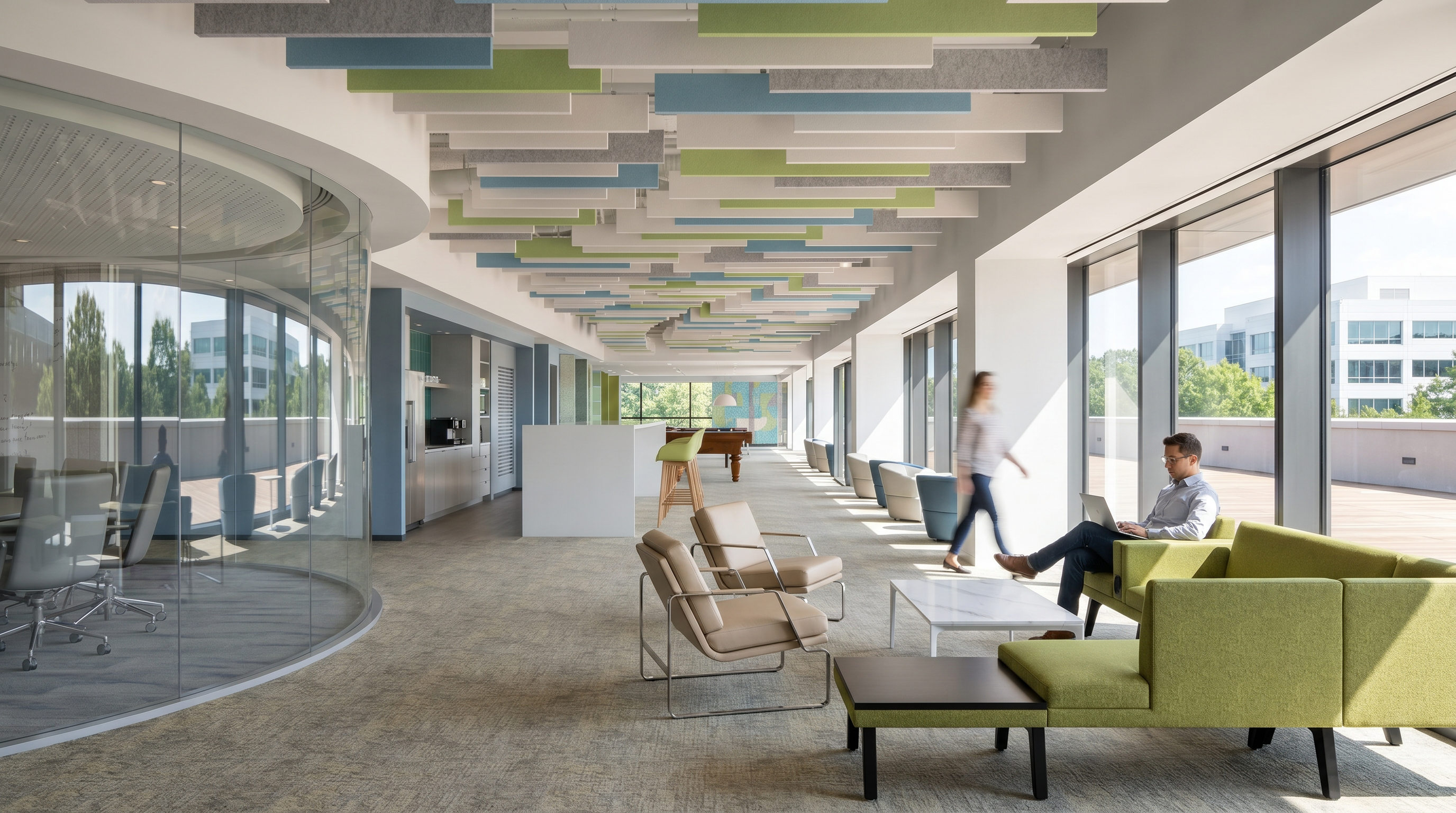
It belongs to no single department and has no single purpose. Instead, it brings together people who would otherwise remain separated by desks, floors and teams. Someone might stop for coffee, have a light meal, open a laptop, hold an informal discussion or speak with a client before a formal meeting begins. It is part workplace, part social setting — a space that asks for no specific task, yet allows many kinds of work to happen.
Meeting rooms still matter, but not every conversation needs one. A question that takes five minutes to solve can easily become an hour-long meeting once rooms, schedules and preparation are involved. A well-planned Plaza gives short, informal exchanges somewhere to happen naturally, reducing unnecessary friction in everyday communication.
It also opens up connections across departments. At a fixed workstation, people mainly see their immediate team. In a Plaza, sales, R&D, brand, supply chain and management are more likely to cross paths.
So the Plaza is not simply a lounge, nor is it an enlarged pantry. It is closer to an internal exchange hub—a place where information and relationships can circulate. This is what we mean by We connect, we inspire. Connection is not simply putting people in the same room. Inspiration begins when different people and different ideas have a reason to meet.
Why Do We Need People to Stay?
A large shared area does not automatically become a well-used one.
Many offices have attractive lounges that people simply walk through. The space may feel too exposed, circulation may cut directly through the seating, or the furniture may look good without supporting the way people actually work. Seating posture, table height, power access and lighting all affect whether someone feels comfortable enough to stay.
Within seconds of entering a space, people make subtle decisions: Where should I sit? Is this seat meant for one person or a group? Will I be in someone else's way? Can I naturally join a conversation? Will sitting alone feel awkward?
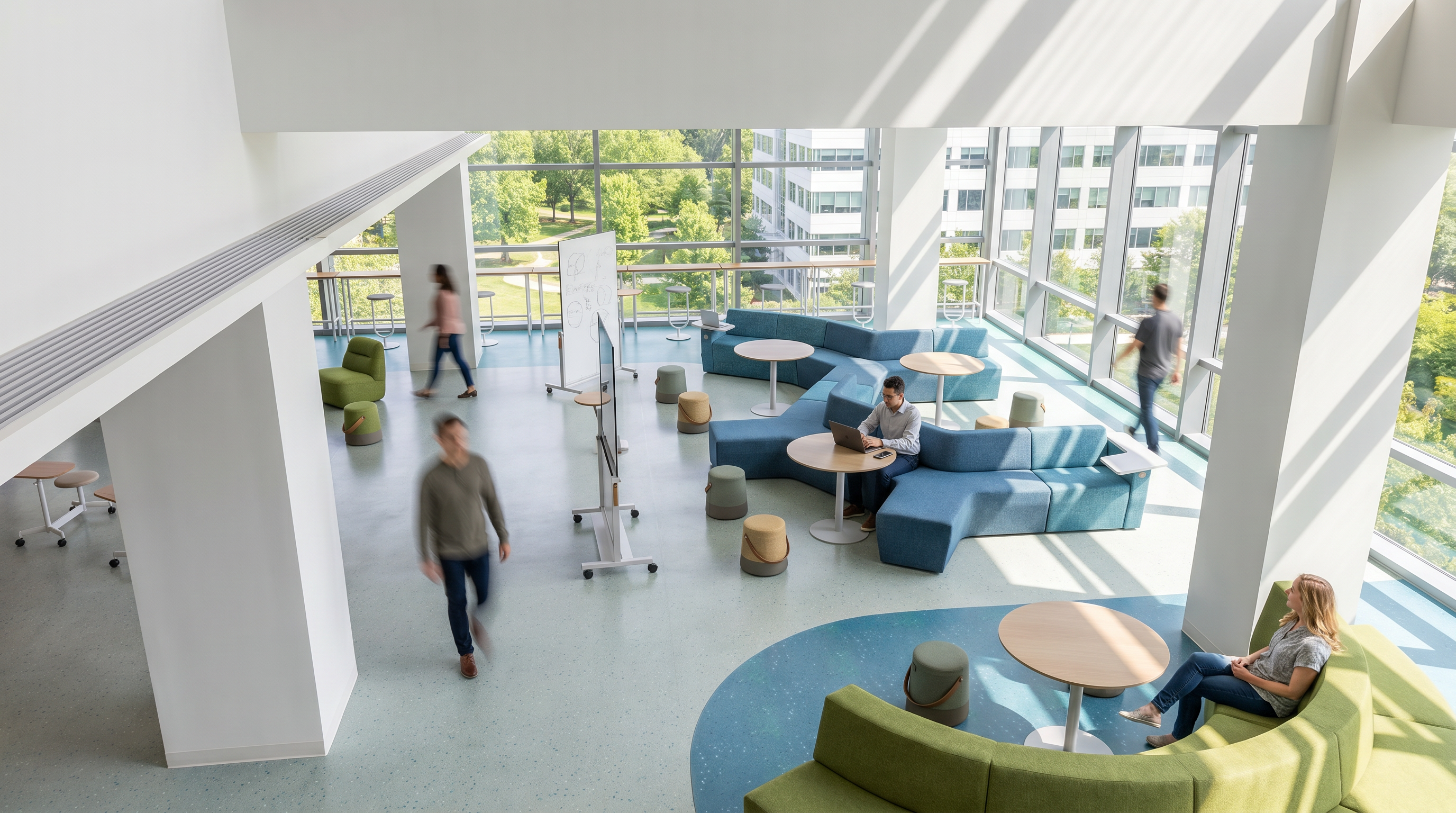
A successful Plaza needs to offer different answers. Some people prefer open, visible settings; others feel more comfortable beside a wall, near a window or within a slightly enclosed area. Some stay for five minutes, while others work for an hour.
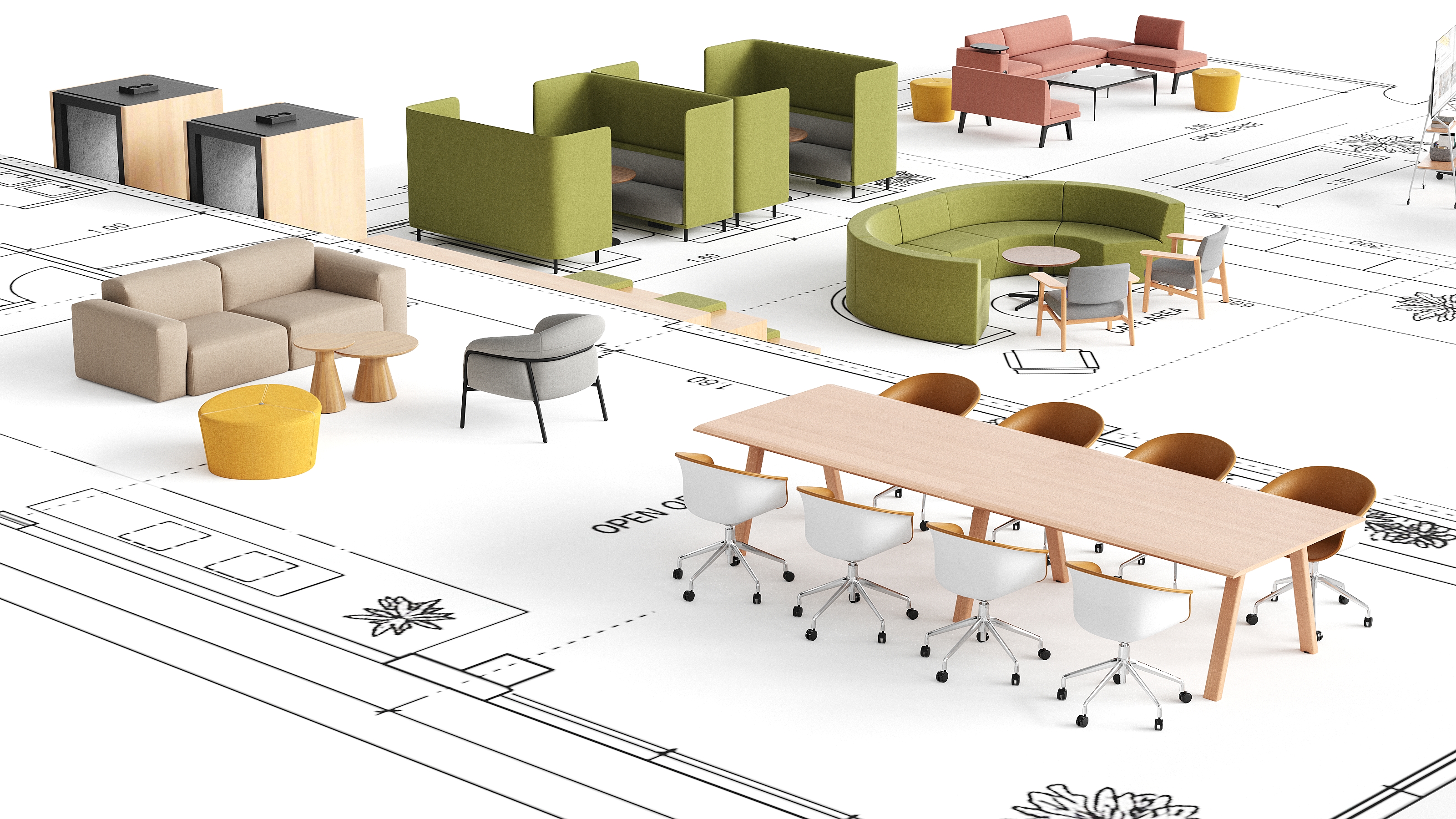
That means the space cannot rely on one sofa type or a repeated grid of identical tables and chairs. It needs both open and more protected settings, places for small groups to gather and places where one person can sit comfortably without feeling out of place.
The challenge is not how many furniture types can fit into the space, but how different combinations create different social distances. Furniture determines how people face one another, how close they sit, where they look and how easily a conversation can begin.
When people choose to stay, exchange follows. A shared space that encourages people to gather is not simply an amenity, it becomes part of the organization's infrastructure.
Home-Like, but Designed for More
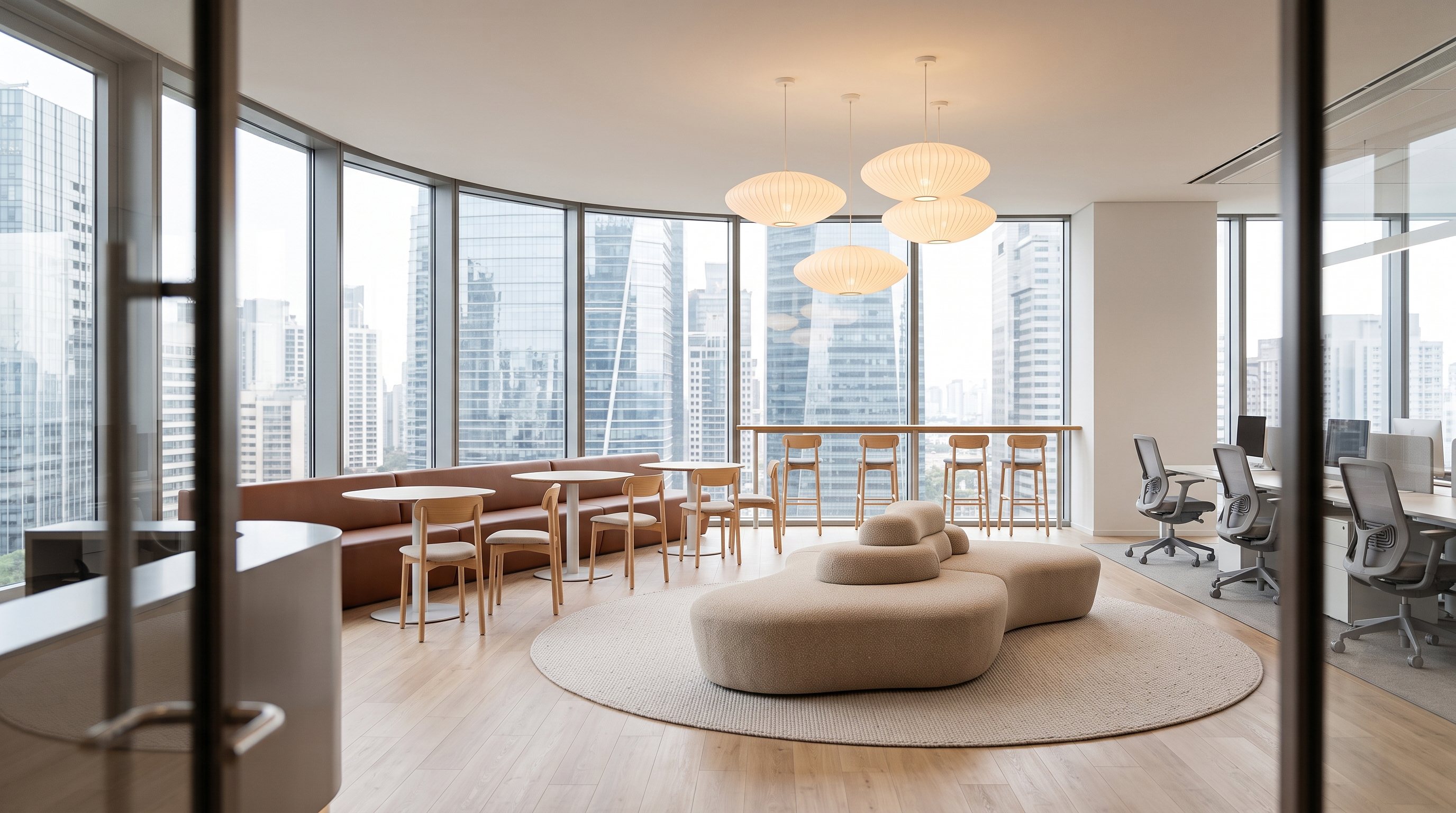
Hospitality has become an increasingly important idea in workplace design, often expressed as making the office feel more like home. But a home-like atmosphere is about more than soft sofas, rugs and warm lighting.
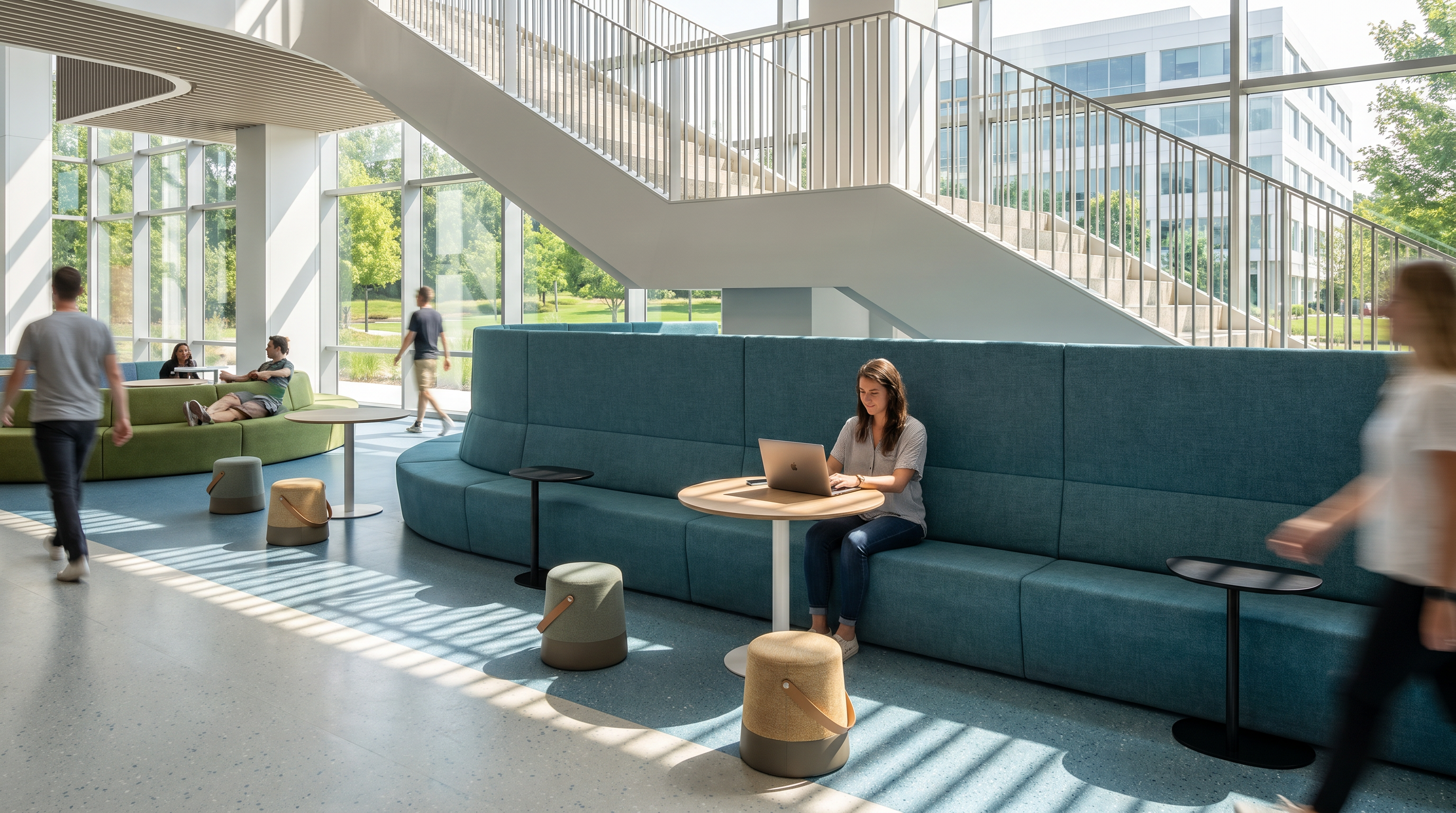
What makes home comfortable is the freedom to choose. You can sit at the dining table or settle into a sofa, talk with someone or spend time alone. There is no single correct posture and no need to look productive every moment. A Plaza should offer a similar sense of ease.
But an office is not a home.
Residential furniture serves a small number of familiar users, while workplace furniture must accommodate many different people and withstand far heavier use. A Plaza can feel relaxed and welcoming while still being designed around durability, ergonomics, movement and appropriate dimensions.
The same thinking applies to materials. Feather-filled seating may feel inviting at first, but under intensive commercial use it can quickly lose shape and appear tired. The goal is not to turn the office into a home. It is to bring warmth and comfort into the workplace without losing the performance the workplace requires.
The Plaza Is Part of a Company's Public Face
A client may spend an hour in a formal meeting, but their impression of a company often begins within the first few minutes of arriving.
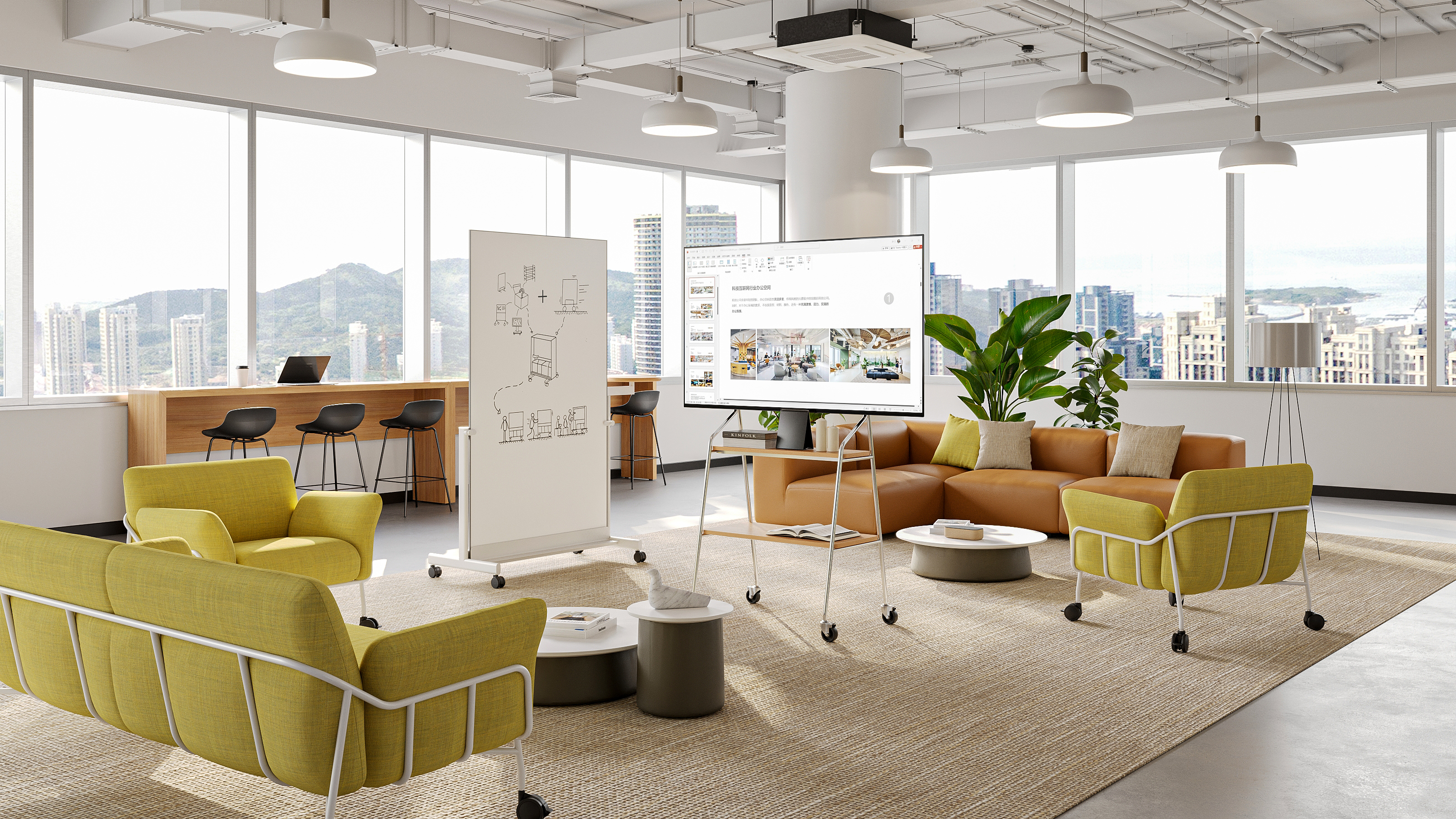
They notice how people interact, whether shared areas are genuinely used and whether the workplace feels tense and detached or open and active. These details communicate culture before anyone explains it.
Values written on a wall are difficult to believe when the surrounding space sits empty. By contrast, seeing people from different teams naturally meeting, working and spending time together makes a company's culture feel tangible.
In this sense, the Plaza is more than a reception area. It is a window into how the organization treats its people, how much it values design and whether its stated culture is reflected in everyday behaviour. Trust is rarely built through a single presentation; more often, it develops through details like these.
Could the Plaza Become a Profit Center?
Shared lounges are rarely discussed in terms of profit because they do not generate orders in the way a sales team does. But their value becomes clearer when measured differently.
If a Plaza makes cross-team communication easier, reduces unnecessary meetings, helps clients build trust more quickly, makes a workplace more attractive to talent and gives employees somewhere to recover during an intense day, then it is already contributing to the business.
An order may be finalized in a meeting room, but the trust behind it may begin over coffee in the Plaza. A major project may start with nothing more than two colleagues meeting by chance and exchanging an unfinished idea.
Spaces that improve connection, strengthen trust, support wellbeing and encourage innovation can all contribute to long-term value. Shared areas have traditionally been treated as cost centers—something to minimize in both area and budget. But when a space helps a company function as a connected organization rather than simply a group of people in the same building, its value can extend far beyond the number of desks it replaces.
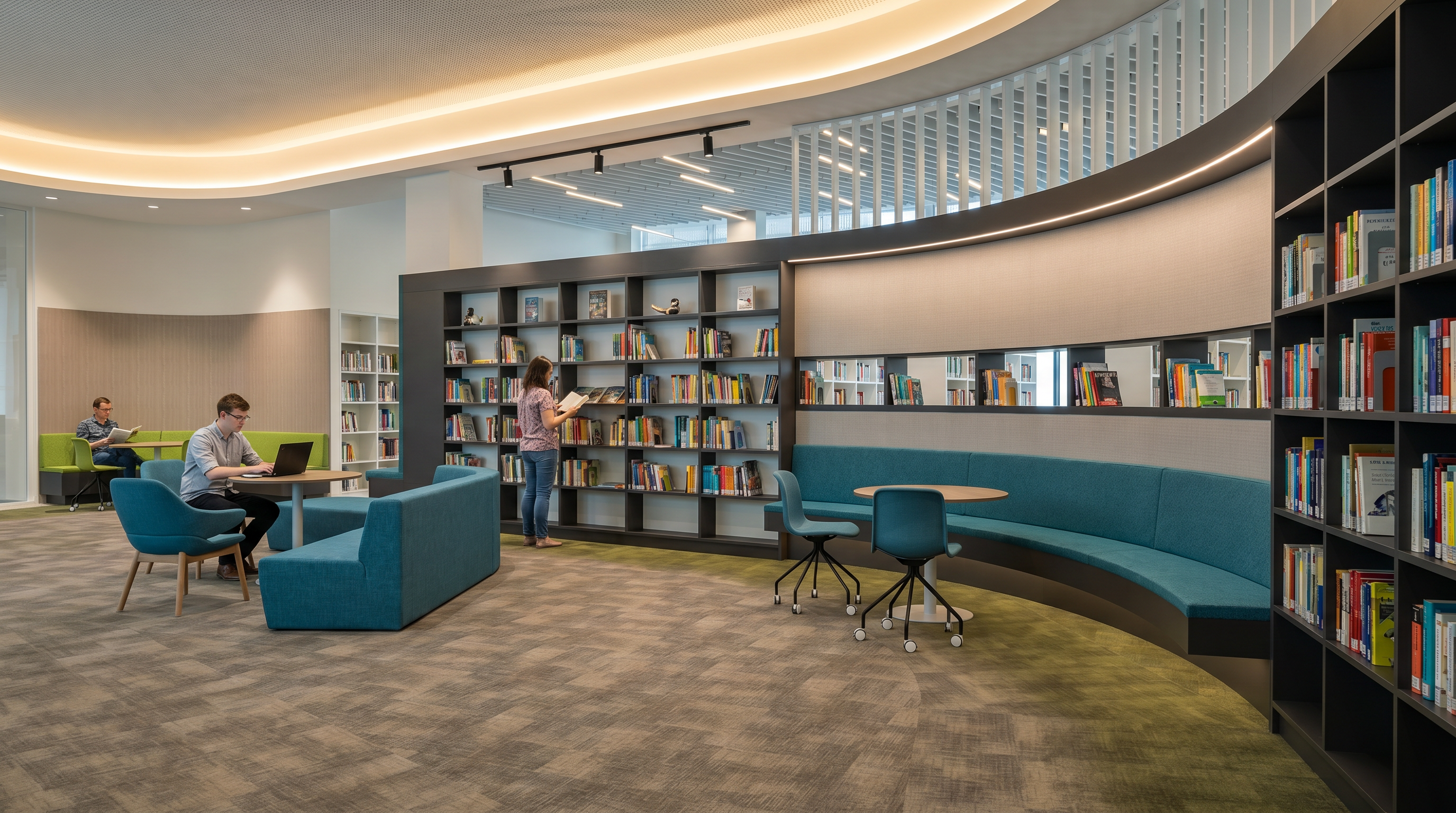
We connect, we inspire
So why do we still need the office in the age of AI?
Technology can transmit information, but it cannot create encounters. It can improve efficiency, but it cannot manufacture trust.
The office remains valuable because it can bring people together, keep information moving, allow relationships to grow and give an unfinished idea the chance to be heard by someone else.
The Plaza is where that can happen.
Designers Introduction